20/10/2026 13:09
Can Customers Still Find Your Repair Examples? Telegram Profile Stories for Cambodian Shoe Shops
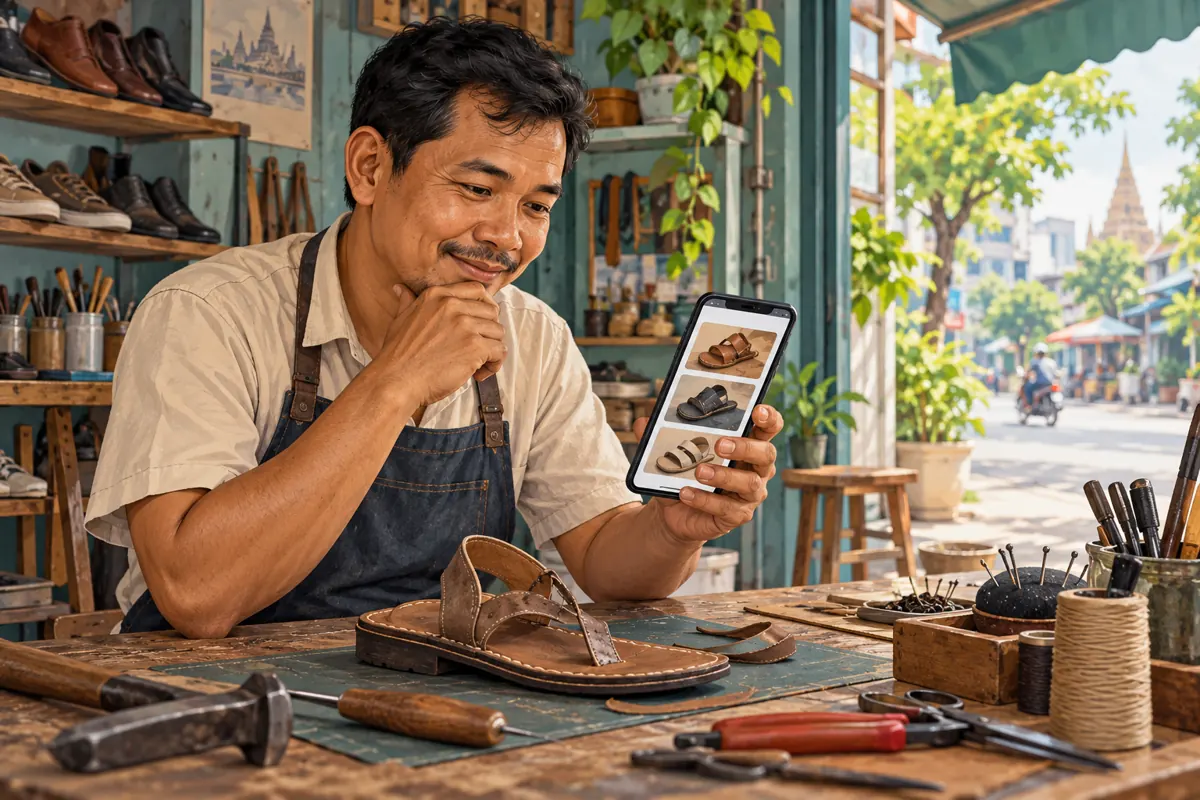
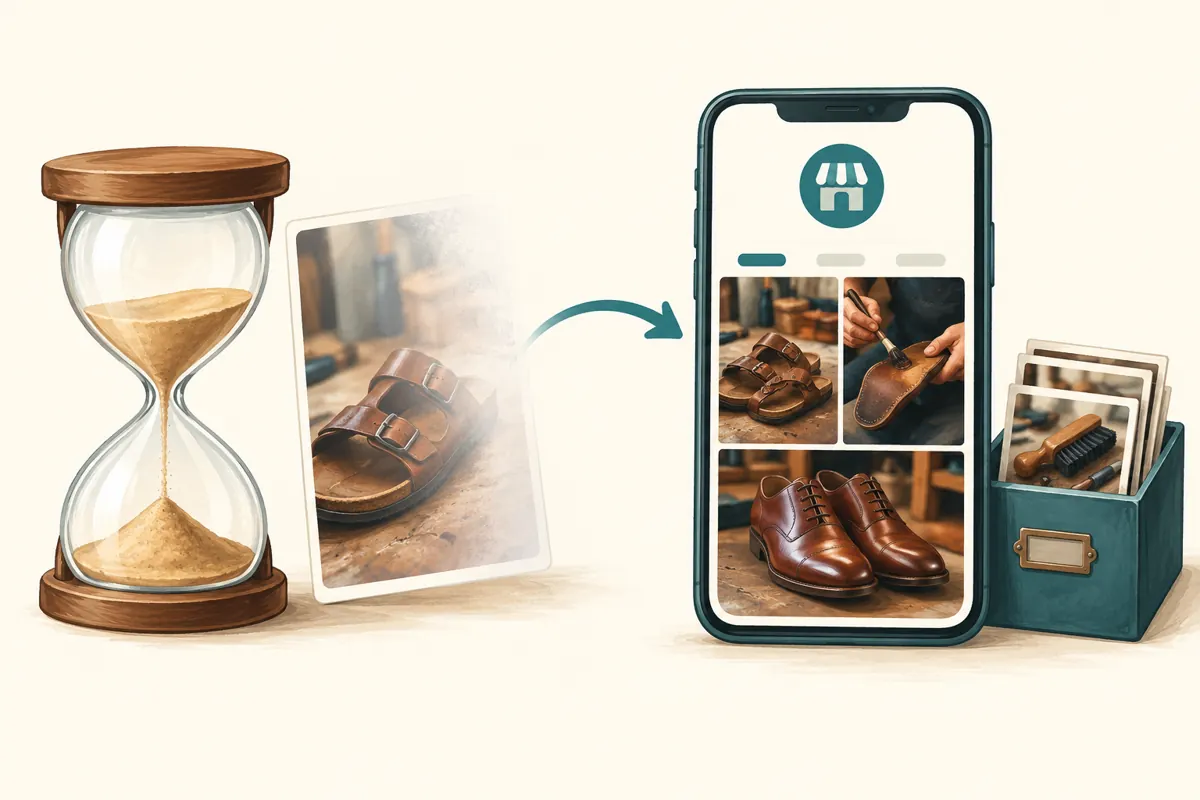
A useful repair demonstration can disappear from everyday attention before the next customer needs it. Someone remembers seeing a sandal strap being repaired, opens the shop’s Telegram profile later, and cannot find the example. The resulting message is vague: “Can you fix mine?” Keeping selected stories on the profile gives that visitor a reference point. For a Cambodian shoe-repair business, the practical goal is to help people recognize a relevant service and send enough information for an initial assessment. This workflow explains what to retain, how to review it and where SMM-panel decisions fit without confusing purchased activity with customer demand.
1. Give the portfolio one specific job
Start with the question your examples should answer: “Does this shop assess damage like mine?” That is narrower and more useful than trying to prove that the shop repairs everything. Review the enquiries staff struggle to interpret. Customers may describe a loose strap, peeling sole and broken buckle using the same general phrase. Your portfolio should help them distinguish those situations visually before anyone discusses a price.
Consider a hypothetical shoe-repair shop in Phnom Penh that regularly receives blurry close-ups without a view of the whole shoe. Its first portfolio could show a strap attachment, a separated sole edge and an example of useful enquiry photos. These are proposed content choices, not reported customer results. The shop would judge the portfolio by whether subsequent conversations contain clearer descriptions and usable images, rather than by whether the profile looks busy.
2. Understand what keeping a story actually does
Telegram’s official story guide explains that stories can remain on a profile, where visitors can browse them after their active story period. Expired stories can also be retrieved from the Story Archive and added to the profile. This gives existing material a second role: an active update becomes a reference example. Keeping it visible does not establish that people will discover it or that Telegram will distribute it to prospective Cambodian customers.
Work on the account customers actually contact. Open Settings, then My Stories, and inspect the available stories and archive. Select a suitable expired example and use the option to add it to the profile. Labels and placement can differ between app versions, so confirm the resulting profile view. This article concerns stories retained on a shop-facing user profile; do not assume that a channel has identical posting requirements.
3. Choose examples that help people identify damage
Select material for recognition, not simply for visual polish. A close-up of a finished seam may look attractive while leaving the viewer unsure whether the service applies to sandals, school shoes or bags. Include enough of the object to establish context, then show the relevant area. For each example, write down the question it answers. If two stories answer the same question equally well, retain the clearer one.
Prefer examples whose meaning will remain stable. A demonstration of where a strap attaches can stay useful longer than an announcement promising collection tomorrow. Explain the scope honestly: the example shows work on that particular item, while another shoe may have different materials or hidden damage. Do not present an attractive finish as evidence of long-term durability. If no suitable customer-approved material exists, photograph a shop-owned practice item and identify it as a demonstration.
4. Make every retained story understandable alone
A visitor may open only one example. Give each story enough context to stand independently: the type of item, the visible problem and the next step. A hypothetical caption might say, “Sandal strap attachment example. Send a whole-shoe photo and a close-up of the loose area for an initial assessment.” This describes what the viewer can do without promising that every similar-looking sandal can be repaired.
For Cambodian customers, use the language your actual enquiries require, with readable Khmer where appropriate and familiar product terms where helpful. Have a fluent colleague review meaning rather than translating technical words mechanically. Keep important details away from visually busy backgrounds. If a video relies on speech, add a concise explanation that also works without sound. Ask a colleague to view the story briefly and describe the problem shown; an incorrect answer reveals a content issue before promotion.
5. Separate public examples from private repair records
Before retaining a story, inspect the entire frame. Repair tickets, handwritten phone numbers, delivery labels and payment screens may sit beside the shoe. Crop or reshoot so the example contains only information needed to understand the work. Obtain permission for identifiable customer material intended for promotion. A customer sending a damage photo for assessment does not automatically mean they want that photo included in a public portfolio.
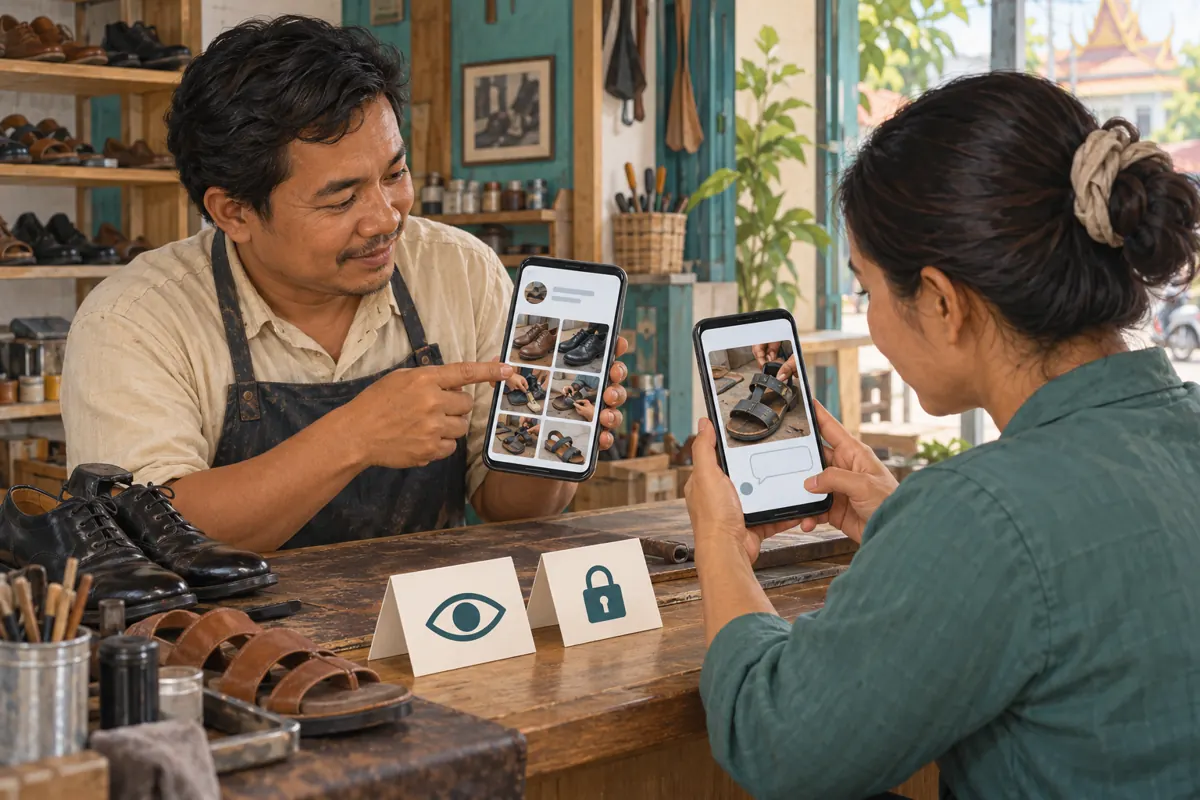
Telegram says profile stories have individual privacy settings. Review each selected story instead of assuming that all retained examples share one audience. Keep personal stories outside the shop’s public presentation. Then ask a consenting colleague whose account reflects the intended visitor relationship to check visibility. If an example is hidden, investigate its settings; if private material is visible, remove it from public view before directing visitors to the profile.
6. Show customers which photos to send next
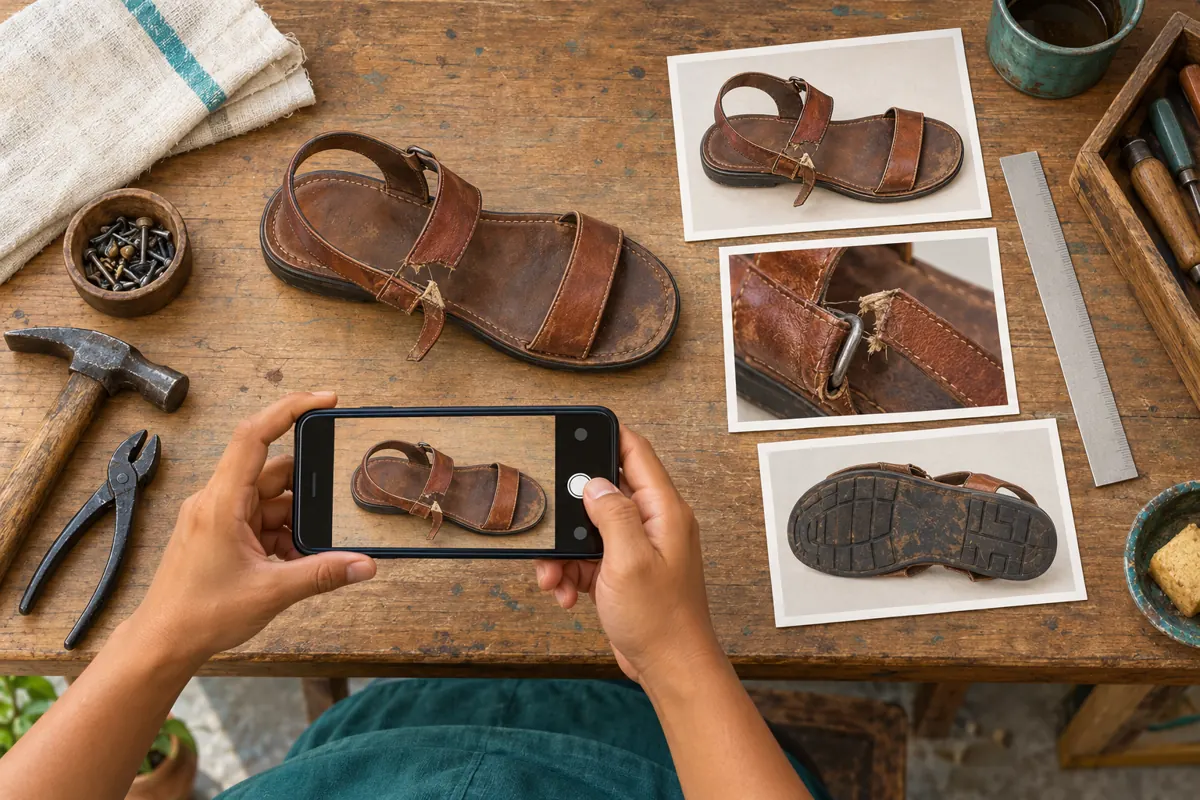
Add an enquiry example alongside the repair examples. Demonstrate a whole-shoe view, a close-up of the affected area and an underside view when relevant. Explain that a photo supports an initial assessment and may not reveal material weakness or damage inside the shoe. This manages expectations while giving customers something practical to do. Avoid asking for a delivery address before it is needed for an agreed collection or return.
In a hypothetical exchange, a customer sends a close-up of a loose sandal strap. Staff refer them to the photo example and request a wider view of the attachment area. After reviewing that image, the shop explains whether an in-person inspection is necessary. The useful outcome is a clearer next step. Do not turn this illustrative exchange into a testimonial, publish the customer’s conversation or imply that the portfolio eliminates the need for professional inspection.
7. Test the route from promotion to enquiry
Before sharing the profile widely, give a colleague a specific task: find the strap example and explain what information the shop requests. Let them begin with the same public reference customers will receive. Avoid guiding every tap. Note where they hesitate, whether similar-looking examples cause confusion and whether the contact destination is clear. This small usability check can expose a missing instruction that the person who created the portfolio no longer notices.
Check the experience on an ordinary phone screen with sound off. Confirm that the relevant damage is visible and that captions remain understandable. Send a clearly identified internal test enquiry through the intended contact route, then verify who receives it and who would respond during shop hours. Correct any mismatch before promotional activity begins. An accessible portfolio is only useful when the next conversation reaches someone able to assess the request.
8. Make an SMM-panel decision based on the actual gap
An SMM panel cannot decide which repair example is relevant, secure customer permission or make a vague caption understandable. Complete those tasks first. Then identify the remaining need precisely. If customers cannot find the portfolio, review the reference you share. If enquiries lack detail, improve the photo instructions. If the shop needs local discovery, consider appropriate legitimate promotion separately rather than treating a larger visible count as a solution.
The supplied lao-smm.com catalogue includes the exact public name “Telegram Premium 3 Month”, but provides no accompanying description. That title alone does not establish its activation method, eligibility conditions or relationship to Telegram. It is also not evidence of a story-promotion service. Verify the actual terms before considering it. Purchased engagement does not prove genuine interest, sales, ad delivery or Cambodian users; neither a catalogue entry nor a delivery record demonstrates that this portfolio attracted suitable repair enquiries.
9. Retire examples when their meaning changes
A retained story can outlive the conditions that made it accurate. Review the portfolio when services, materials, staffing or collection arrangements change. An example may still show real past work but suggest a capability the shop no longer offers. Decide whether it needs clearer historical context or should leave the public portfolio. Assign one person to this review so an outdated offer does not remain visible because everyone assumes someone else checked it.
Common mistakes include retaining every story, showing only finished shoes, leaving temporary prices inside permanent examples and describing a demonstration as a guaranteed result. Another mistake is repeatedly adding similar material until useful guidance becomes difficult to find. Keep a short internal list of each retained example, its purpose and the condition that would trigger removal. A manageable selection is easier to review than an accumulating history with no editorial owner.
10. Evaluate clearer conversations, not apparent popularity
For a chosen review period, note whether new enquiries identify the damaged part, include the requested views and lead to a clear assessment step. Staff can record simple observations such as “whole-shoe photo missing” or “customer referred to strap example”. Keep these notes separate from any SMM order history. They describe the usefulness of conversations; they do not establish that a particular promotional action caused a sale.
Ask customers how they found the shop only when that question fits naturally into the conversation. Treat their answer as their account, not complete attribution evidence. A person might discover the shop through a friend, inspect a profile story and visit later. If the same misunderstanding keeps appearing, revise the relevant example before adding more content. Maintain the portfolio as a practical service guide whose value depends on accuracy, visibility and a workable response process.
Frequently asked questions
Should every repair story stay on the profile?
No. Retain examples that answer distinct customer questions and remain accurate. A temporary opening-hours notice or a repetitive finished-shoe photo may add little lasting value. Use a simple test: would this story help a new visitor recognize a service or send a better enquiry? If not, it probably does not belong in the reference portfolio.
Can an old example stay visible after the price changes?
Only if its presentation remains accurate. Remove obsolete prices or clarify the historical context before continuing to use it. For repair work, avoid suggesting that a pictured example determines the price of another item. Explain what staff need to assess and provide a current quotation through the shop’s normal process.
Does buying Telegram Premium mean more Cambodian customers will see the portfolio?
A subscription is not evidence of Cambodian reach or buying intent. Telegram documents additional Premium features, but those features do not establish who will discover your business or need its services. The supplied panel listing also lacks descriptive terms, so do not infer its fulfilment method or promotional effect from its name.
What if customers still send incomplete photographs?
Identify which view is repeatedly missing and make that instruction more concrete. Show the angle using a shop-owned item, then ask a colleague to follow the example without coaching. Some customers will still need individual help. Use the portfolio to support that conversation rather than treating incomplete submissions as a reason to reject enquiries.
Explore the current service catalogue, create an account, or ask a specific question through support tickets.
- Telegram Stories: Profile Stories, Story Archive and Privacy Settings
- Telegram: Stories and 10 Years of Telegram
Prepared with AI assistance. Illustrations explain the workflow and do not represent customer results.