22/10/2026 15:36
Which Cartridge Did They Name? YouTube Transcripts for Cambodian Tap-Parts Shops
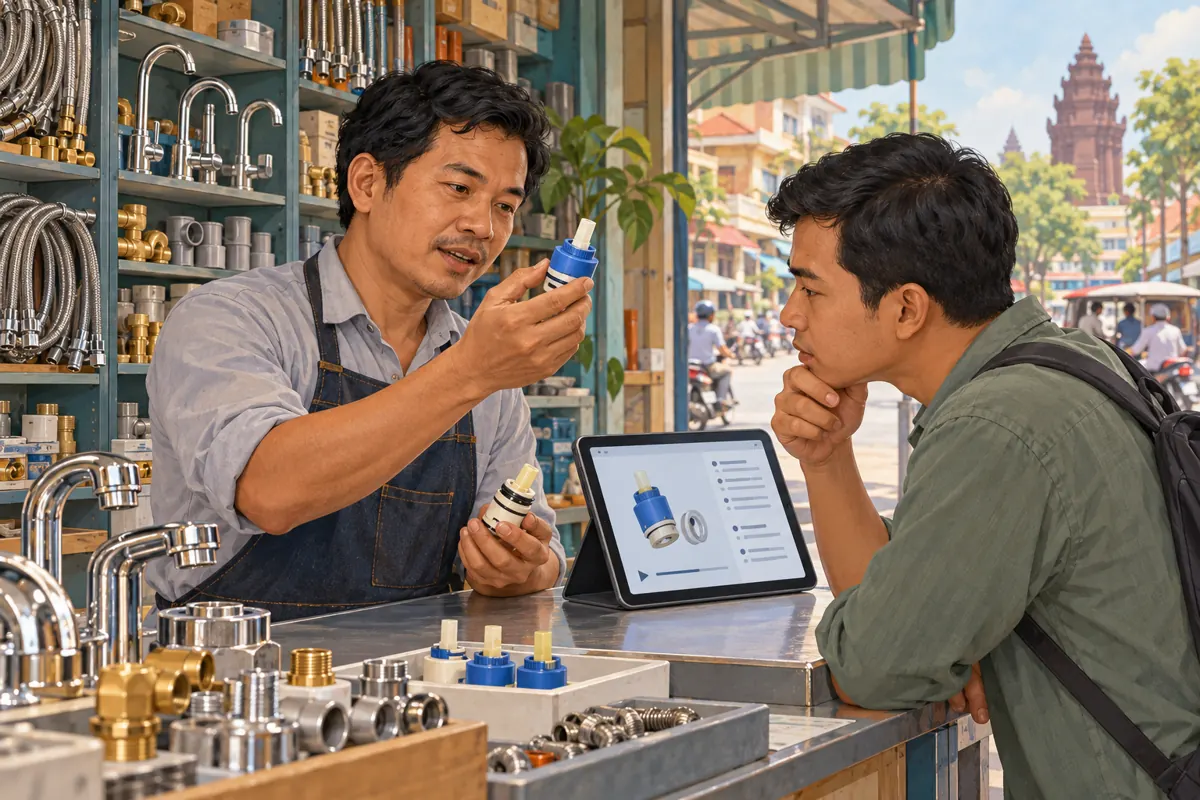
A buyer remembers the cartridge shown in your video but cannot remember what you called it. They replay the opening, skip past the close-up, and send a message asking for “the blue one.” For a Cambodian tap-parts shop, that is a practical communication problem: a useful demonstration has become difficult to revisit. A YouTube transcript can help viewers return to the spoken explanation and reconnect a name with the object on screen. This workflow shows how to prepare that reading-and-replay route, test it with a colleague, and keep promotion decisions separate from evidence of product suitability or customer demand.
Start with a question the transcript can help answer
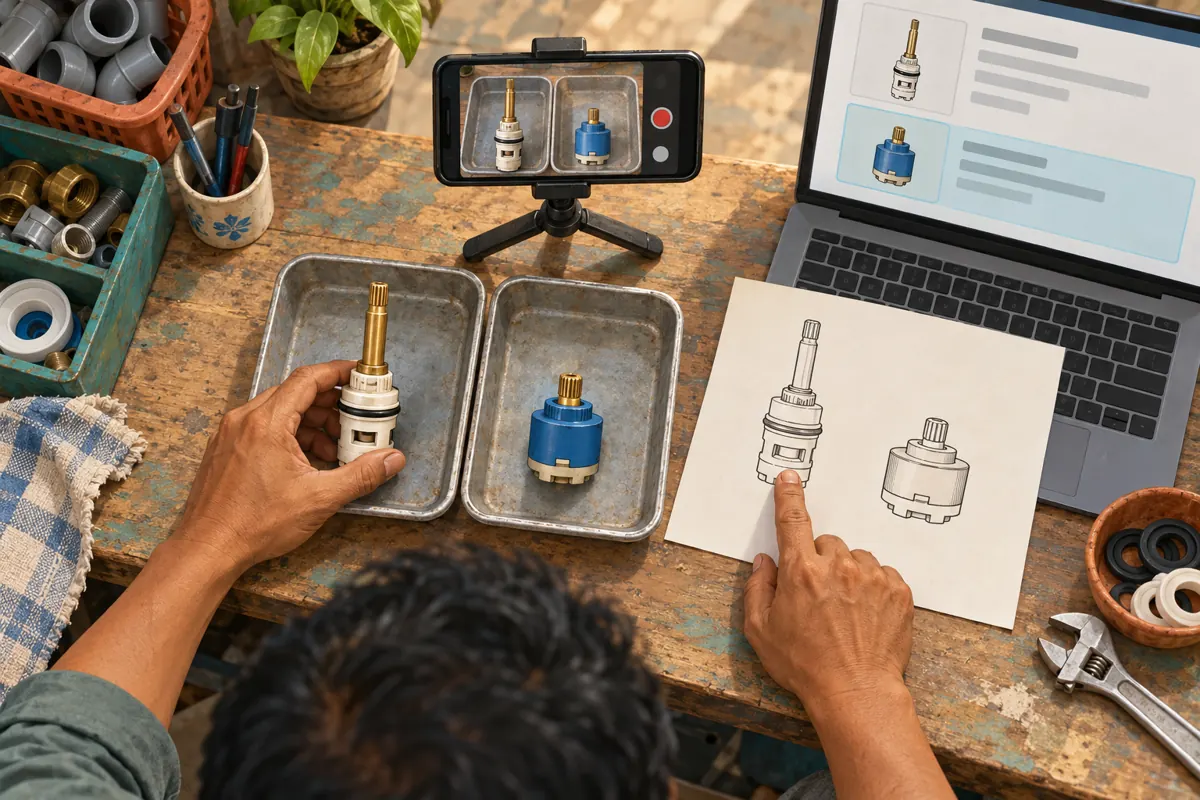
In a hypothetical Phnom Penh shop, an assistant films two replacement tap cartridges that look similar from above. The demonstration explains their visible differences, but enquiries arrive describing only their colour. The shop's objective is to help a viewer find the sentence naming each sample, replay the corresponding close-up, and ask a more precise question. It is not to let customers diagnose compatibility from a transcript alone.
Choose one existing demonstration with this kind of retrieval problem. Write a simple task before editing: “Find the part being discussed when the presenter describes the underside.” This gives the team something observable to test. If the footage never shows the underside clearly, improve the demonstration first. Written speech cannot supply visual evidence that the camera missed, and a better navigation route cannot repair an unsupported product claim.
Understand the route from caption text to video
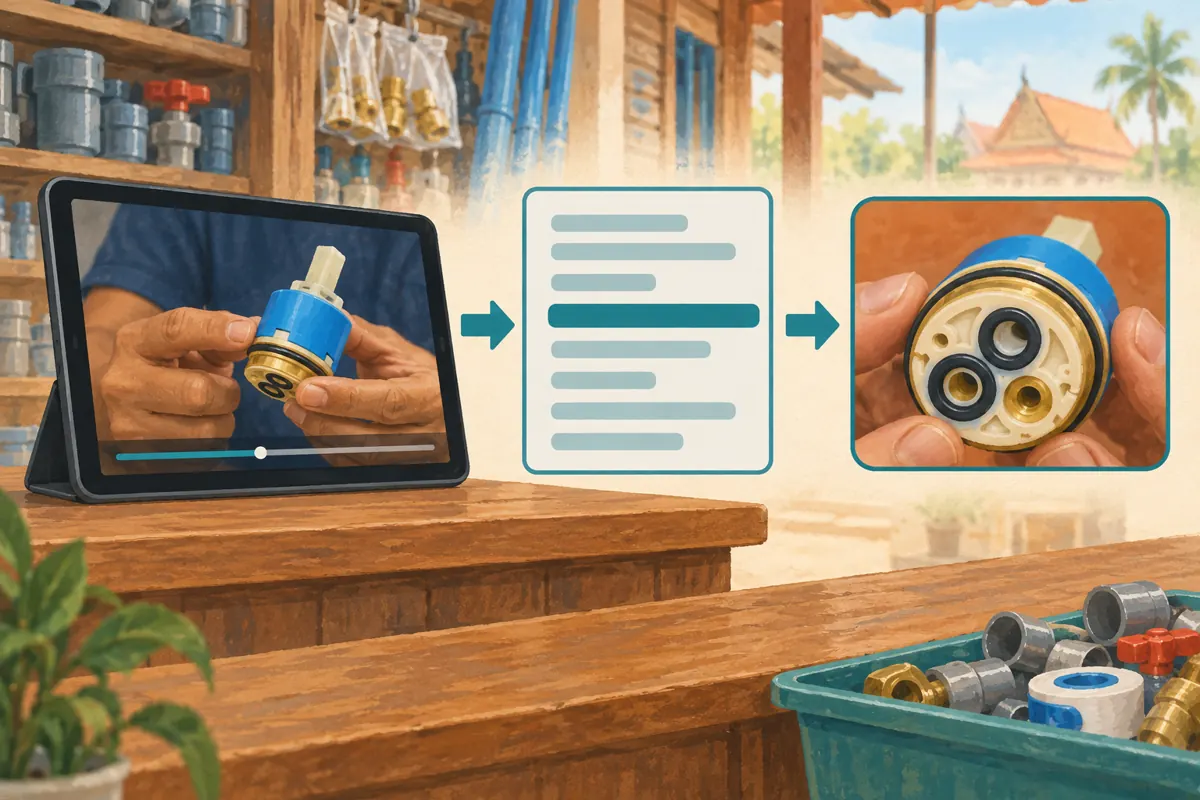
YouTube's official View video transcripts guidance explains that viewers can see a transcript for a video with captions. From the description, select Show transcript, then select a caption line to jump to that part of the video. The transcript follows the caption text as playback continues. Treat this as a way to revisit an explanation, rather than a separate product catalogue.
For the shop, the useful connection is between a recognisable phrase and a clear shot. A viewer who finds the sentence about the cartridge base should arrive where that base is visible. Test this connection on the device your colleague actually uses. Avoid designing the entire customer instruction around a particular screen layout: describe the feature briefly, then offer the spoken phrase and an approximate location in the demonstration as additional help.
Make spoken references understandable when read alone
During filming, phrases such as “this one” and “the other type” feel natural because the presenter is holding the objects. In a transcript, those phrases provide weak landmarks. Give each sample a consistent spoken reference and repeat it when moving to another feature. A hypothetical shop could use “the long-stem sample” and “the short-stem sample,” provided those descriptions accurately distinguish the objects being shown.
Prepare a small internal reference sheet containing the sample photograph, the shop's verified product name, and any code actually confirmed on its packaging or records. Use it to keep narration consistent. Do not invent a model designation for convenience. For Khmer narration containing a genuine brand or alphanumeric code, agree on the spelling before recording. Keep the explanation natural; repeating a keyword in every sentence makes the demonstration harder to follow.
Review automatic captions without assuming they are correct
YouTube's Use automatic captioning guidance currently lists Central Khmer among supported languages for automatic captions on uploaded videos. It also warns that recognition can misrepresent speech and that captions may not be ready immediately. Noise, overlapping speakers, and other audio problems can interfere. Language support therefore does not establish that your particular demonstration has a usable transcript.
Listen to the published caption track alongside the recording. Prioritise product names, units, codes, and qualifying words such as “not.” In YouTube Studio, use the Subtitles area to locate the video's captions and review or correct the relevant track. Assign this task to someone who understands both the spoken language and the shop's terminology. If the presenter says the wrong specification, changing the text alone would leave conflicting information; resolve the underlying demonstration before promoting it.
Check the moment a reader lands on
Correct words are only half the task. Select the line that names a sample and watch what appears immediately afterwards. Does the presenter still hold that sample, or have they already switched objects? Does a hand cover the relevant feature? Does the selected sentence begin halfway through a comparison whose meaning depends on the preceding sentence?
In the hypothetical cartridge demonstration, the line about a longer stem might land while both samples are outside the frame. The practical fix is to improve the relationship between narration and footage, then check the resulting captions again. Leave enough visual context around important explanations for a viewer arriving midway through the video. Avoid making every sentence depend on a previous gesture. Someone returning through the transcript should be able to identify the object without watching the whole opening again.
Keep identification separate from a fitting decision
A transcript can help a buyer say which sample they mean. It cannot establish that the sample fits their tap. Colour, a familiar name, or a similar silhouette may be insufficient. Frame the demonstration as an aid to discussing the part, and explain what your shop needs before confirming suitability. Base that request on the products and checks your team can actually assess.
For example, the hypothetical shop might request a clear photograph of the existing loose part and any legible manufacturer marking, then ask follow-up questions privately. Do not tell an inexperienced viewer to dismantle an installed tap merely to complete a social media enquiry. If identification requires hands-on inspection, state that plainly. Keep changing information, such as today's stock availability or a personalised quote, in the current customer conversation rather than treating an older spoken explanation as a standing promise.
Give viewers a short reason to open the transcript
A promotion should explain the practical value of the video. “Compare the two sample bases before sending your enquiry” is more informative than a vague instruction to watch everything. Where appropriate, add a short viewer note explaining that the transcript helps them return to the spoken part description. Write that note in the language used by the intended audience, even when the business also serves customers in another language.
For a hypothetical campaign, an assistant could share the demonstration with an accompanying message asking buyers to identify the sample they are referring to. Keep the request modest: a sample name and a clear question are enough to start. Avoid demanding public photographs of receipts or household details. Make the response route easy to find, and have someone ready to clarify ambiguous references. Promotion creates an opportunity for a conversation; the shop still has to conduct it carefully.
Decide whether an SMM service belongs in this workflow
The supplied lao-smm.com catalogue includes “YouTube - Social Share ~ Speed 1000/days ~ 90 days Auto Refill Protection.” Its title presents it as a YouTube sharing service, but the supplied description is empty. The title alone does not verify its delivery method, advertised speed, protection terms, audience location, or suitability for this demonstration. It also does not describe caption editing or transcript preparation.
Before considering any service, establish what action it performs and whether that method complies with the platform's rules. YouTube's Fake engagement policy prohibits artificial increases in engagement metrics and warns that a hired promoter's actions can affect the channel. Reject artificial engagement methods; defer an order when the method remains unclear. Purchased engagement is not evidence of genuine interest, sales, ad delivery, or Cambodian users. A service order cannot prove that anyone understood the cartridge comparison.
Run a viewer test before sharing more widely
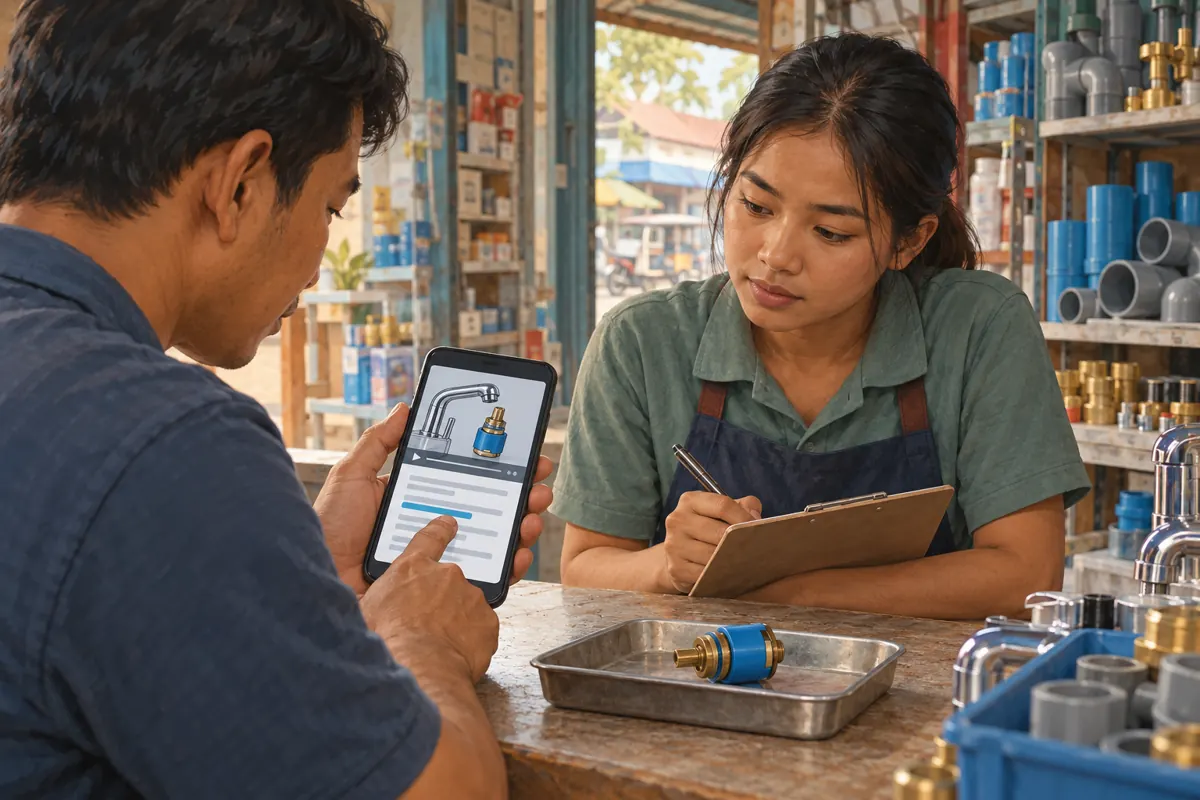
Ask a colleague who did not edit the video to complete the original task on a phone. Give them the ordinary viewer link and ask them to find the explanation of one sample's underside. Observe without immediately pointing to the answer. Note whether they understand the spoken reference, locate the relevant passage, and see the intended object when they resume playback.
Then ask the colleague what information they would send the shop next. This reveals whether the demonstration accidentally suggests that visual resemblance guarantees a fit. Record the actual stumbling point rather than a vague judgement that the video is confusing. For example: “The sample name was clear, but the close-up showed both bases without indicating which was being discussed.” Fix that issue and repeat the affected task. One successful internal test is useful quality control, not proof of market-wide results.
Measure clearer enquiries without inventing attribution
After sharing the video, keep a small enquiry log using categories that reflect the shop's work. Examples include “sample identified,” “additional photograph needed,” and “inspection required.” Record whether a customer explicitly says they used the transcript; otherwise leave that unknown. A message that quotes a part name may have come from the audio, a staff reply, or another person.
Review the log to decide what explanation needs improvement next. If buyers identify the sample but still miss a limitation, make that limitation easier to understand in the demonstration. Keep service delivery records separate from these observations. Neither a higher counter nor a completed panel order establishes that local buyers learned anything. Describe findings narrowly: a specific question became easier to answer, or a recurring ambiguity remained. Avoid turning a few conversations into a claimed conversion rate.
Avoid fixes that create a second misunderstanding
Common mistakes include replacing an unfamiliar product name with a more popular but inaccurate term, leaving a missing negative uncorrected, and assuming that attractive text on the video is enough. A decorative label and a selectable transcript are different parts of the viewer experience. Another mistake is correcting the caption while ignoring contradictory speech or footage.
Use a simple decision process. If the information is wrong, correct the underlying content. If the information is right but difficult to revisit, improve the spoken references and caption alignment. If viewers can find the explanation but still cannot choose safely, strengthen the enquiry instructions. Only after these checks should wider promotion be considered. Preserve the approved product reference sheet so that the next person answering messages uses the same names and understands the same limitations.
Frequently asked questions
What should we do if viewers cannot find Show transcript?
First check whether the video has captions available to viewers. YouTube's transcript guidance ties the feature to captioned videos. If automatic captions are still processing or absent, do not promise that the transcript is ready. Meanwhile, direct the customer to the relevant spoken explanation and provide a brief written answer to their immediate question.
Can we use an English transcript for a Khmer-speaking customer base?
Choose language support according to what your viewers can comfortably understand. An English version may help some customers, but it should not replace an accurate Khmer explanation when that is what your audience needs. Have a knowledgeable reviewer check technical meaning across languages, especially codes, units, and conditions.
Should the transcript include extra product keywords?
Keep captions faithful to the spoken content. Adding unrelated keywords would make the reading experience less trustworthy and could separate the text from the demonstration. If an important name was never spoken, consider improving the narration or adding a clearly separate written product explanation instead.
Can a sharing service confirm that Cambodian buyers watched the explanation?
No. The listed service's empty description provides no basis for a Cambodian audience claim, and a delivery record does not demonstrate comprehension. Evaluate the service method separately. Use actual customer conversations to learn whether the explanation helped, and acknowledge when the source of an enquiry is unknown.
Explore the current service catalogue, create an account, or ask a specific question through support tickets.
- YouTube Help: View video transcripts
- YouTube Help: Use automatic captioning
- YouTube Help: Fake engagement policy
Prepared with AI assistance. Illustrations explain the workflow and do not represent customer results.