21/10/2026 06:41
Which Lunch-Bag Question Should You Film? TikTok Search Insights for Cambodian Shops
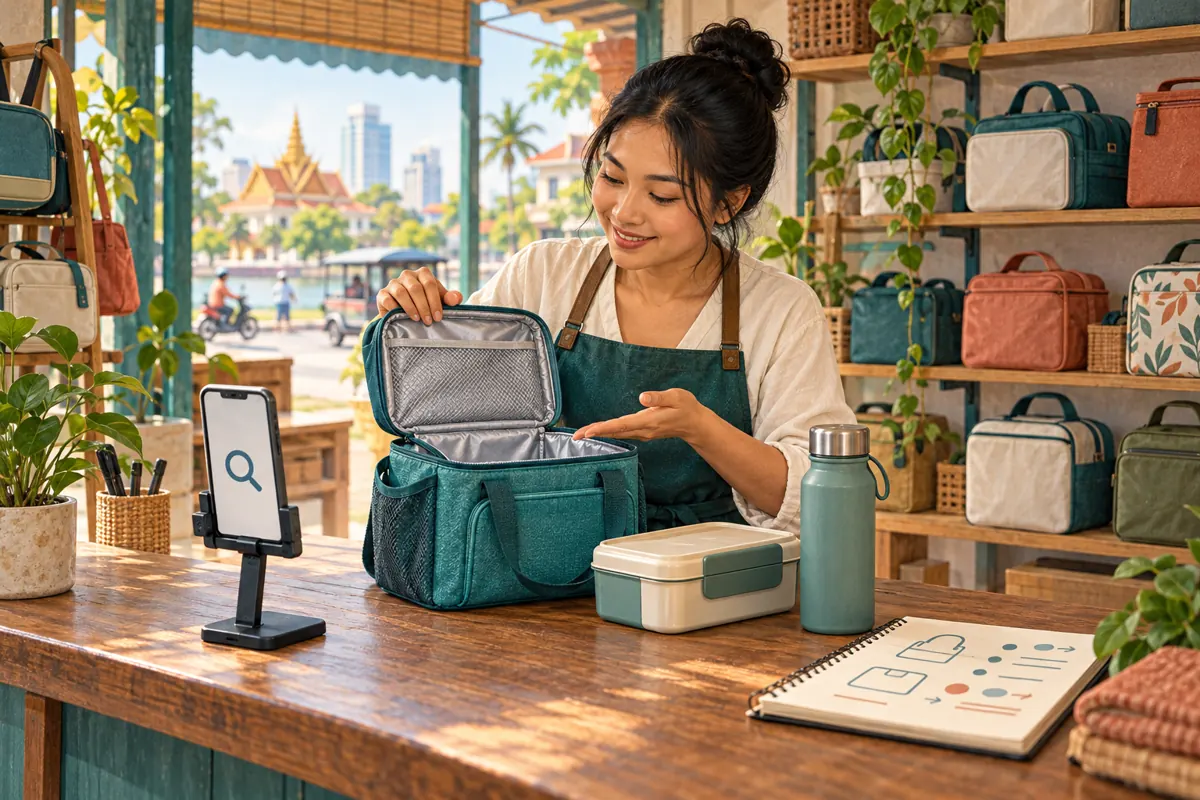
A lunch-bag shop can publish attractive videos while leaving a buyer’s main question unanswered: will my lunchbox fit inside? For Cambodian businesses planning social media promotion, choosing the right question matters before choosing a posting schedule or considering an SMM panel. TikTok Creator Search Insights can provide topic ideas where available, but those ideas still need a practical shop-level review. This workflow turns a search suggestion into a demonstrable answer, checks whether it serves the customers you can actually supply, and keeps content learning separate from purchased engagement. The shop situations below are hypothetical examples, not customer results or claims about Cambodian search volumes.
1. Start with a buying obstacle you can demonstrate
Imagine a hypothetical Phnom Penh shop selling insulated lunch bags to people carrying meals to work. Its owner is considering three videos: a colour showcase, a cleaning demonstration, and a lunchbox fit test. All could be useful, but they solve different problems. The fit test helps someone decide whether an existing container works with the bag; the colour showcase helps someone choose an appearance after deciding the bag is suitable.
Write the obstacle before opening TikTok: a customer cannot tell whether the bag closes around their container. Then identify what would resolve it: the exact bag model, the container’s outside dimensions, a clear insertion shot, and an unobstructed closure. This gives research a purpose. A popular topic only belongs in the filming queue if the shop can answer it accurately with products and information it actually has.
2. Check whether Creator Search Insights is available
TikTok describes Creator Search Insights as a source of personalised information about searched topics. Its launch announcement specifies availability in selected regions, so Cambodian businesses should check their own account rather than assume access. In the app, search for Creator Search Insights and look for the tool’s View entry. If it does not appear, use actual customer questions as the starting point for this workflow.
Where accessible, TikTok’s Help Center describes topic exploration, a Content gap filter, related searches and videos, and search analytics for posts. The Searches by followers filter requires more than 1,000 followers. These are research functions, not reasons to chase an account threshold. If a filter is unavailable, continue with the information you can see. Do not pay someone who promises to unlock it through engagement purchases or requests your login credentials.
3. Interpret a content gap as a research lead
TikTok’s launch explanation describes content gaps as frequently searched topics with relatively few videos. That can suggest an unanswered question, but it does not establish demand for your stock. A broad topic about lunch storage might concern recipes, home organisation, school routines, or temperature performance. Your shop may only be equipped to demonstrate bag capacity and construction.
For each promising topic, write a plain-language interpretation and an uncertainty. For example, a hypothetical note could read: people may want to see whether a rectangular container sits flat; we do not know which container sizes they own. This keeps the team from turning an ambiguous suggestion into a confident sales claim. Reject topics that require unsupported promises, unavailable products, or demonstrations you cannot perform honestly. A narrower answer with visible evidence is more useful than a broad promise.
4. Apply a Cambodian customer relevance check
Compare the topic with questions the shop receives in person and through its normal enquiry channels. Record wording without copying names, phone numbers, or private conversations into the filming brief. If customers commonly ask whether a bottle must travel separately, that practical detail may deserve attention even when it is absent from the tool’s suggestions.
Consider language, product availability, and fulfilment separately. Plan spoken Khmer when that serves the intended customers, retaining genuine model names where needed. Have a fluent colleague check the meaning of any English research phrase before translating it into a script. Confirm which bag version is currently stocked and where the shop can deliver or arrange collection. A search suggestion alone does not establish that searchers are Cambodian, within delivery range, or ready to purchase. These checks help the business choose a relevant answer without pretending to know the search audience.
5. Choose one question with a simple decision process
Evaluate each candidate against three questions: do customers need the answer, can the shop demonstrate it, and can staff handle the resulting enquiry? Proceed when all three are clear. Revise a vague topic into a specific question when the evidence is available but the scope is too broad. Park a topic when answering it would require guessing about performance or supply.
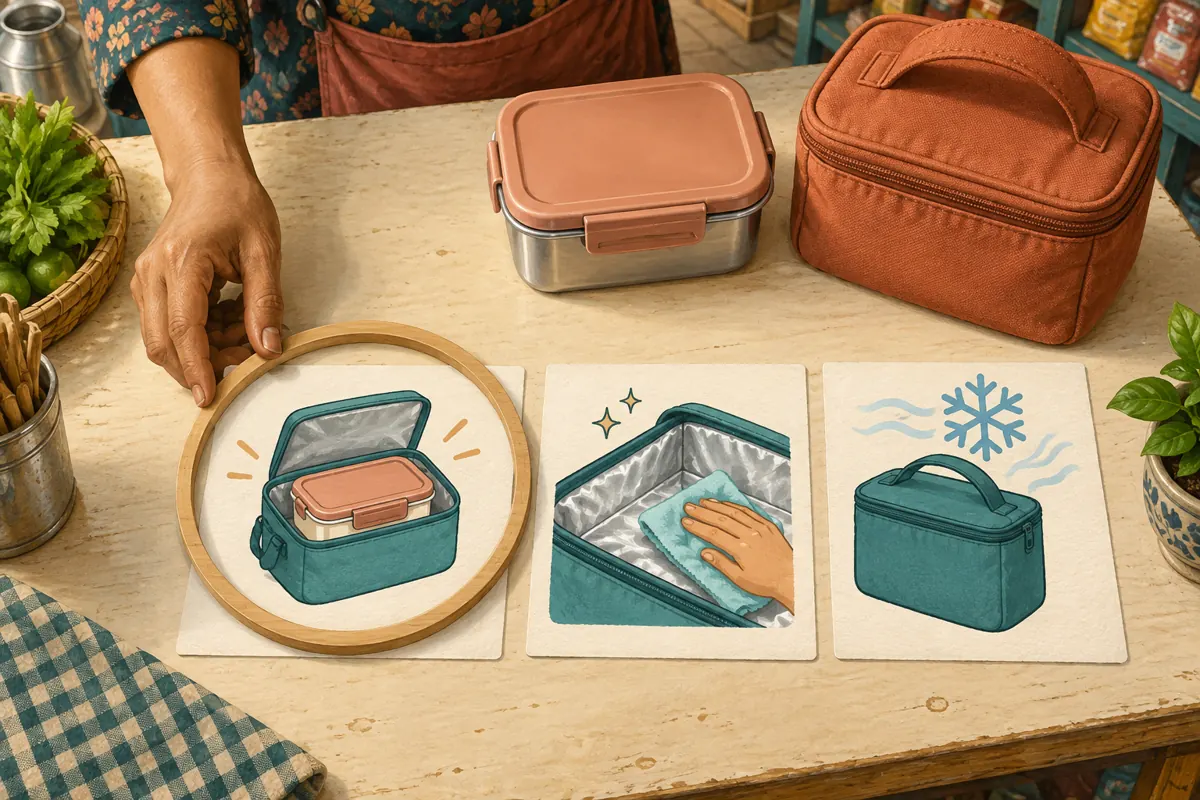
In the hypothetical shop, a lunchbox fit test passes because staff can measure both objects and film the closure. A claim that a bag keeps every meal cold throughout a working day fails because the shop has no supporting test evidence for those conditions. A cleaning video remains possible after checking the product’s care instructions. Record why the fit question was selected. That decision note helps the next staff member understand the purpose without treating a popularity label as an instruction.
6. Film the answer so viewers can inspect it
Prepare the actual bag and container before recording. Measure the container at its widest outside points, including protruding clips or handles. Check the opening as well as the bag’s interior: a container might occupy the available space yet be awkward to insert. Keep the same product version visible throughout, and identify it clearly in the published explanation.
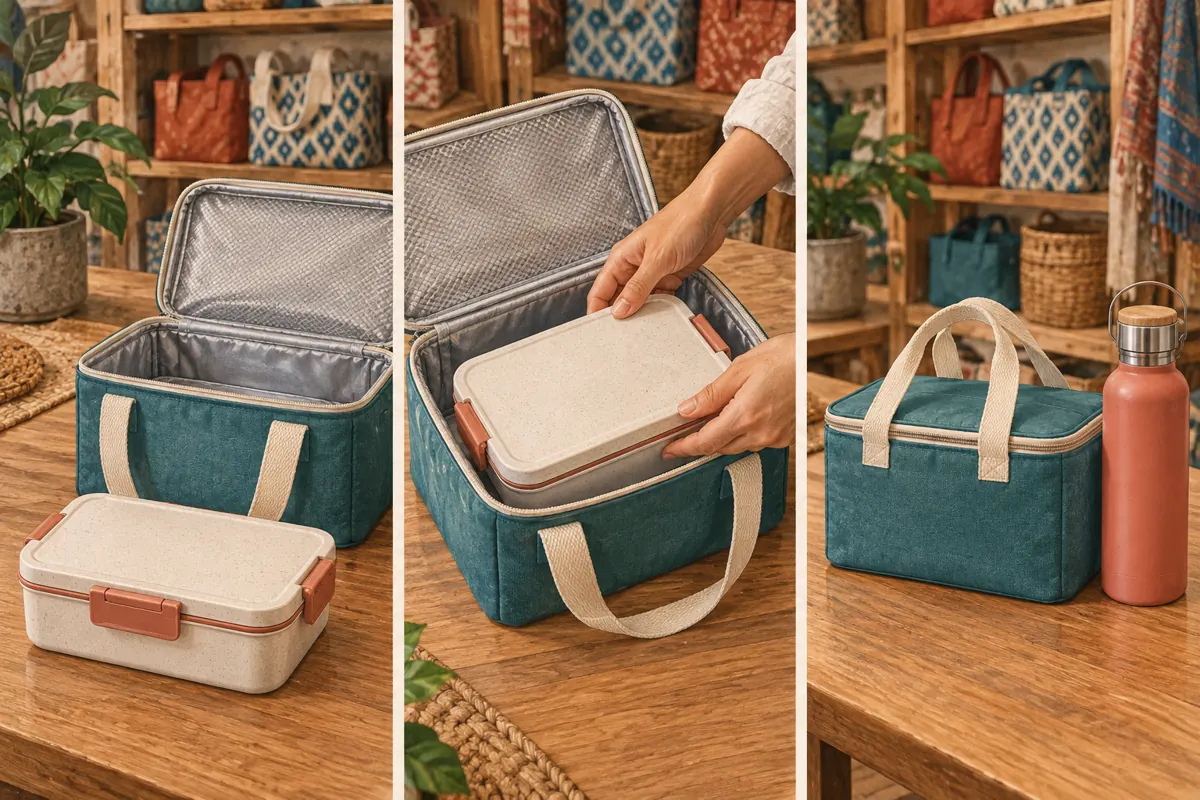
Build the demonstration around a continuous sequence: show the objects separately, lower the container into the bag, show the remaining space, and close the zip without forcing it. Keep fingers away from the crucial clearance area. If the bottle stays outside, say so rather than allowing the composition to imply it fits too. Finish by explaining the limit: the demonstration establishes fit for the objects shown. It does not establish leak resistance, temperature retention, or compatibility with every container sold under a similar size label.
7. Connect the video to a useful enquiry
Write the opening around the question answered on screen. A hypothetical English planning line is: will this rectangular lunchbox fit flat in this bag? The final customer-facing wording should use the language your audience understands. Include the bag identifier and measured dimensions where viewers can read them, checking the video on a small phone before release. Avoid filling the caption with unrelated search phrases.
Choose a next step that helps staff give an accurate answer. Ask interested buyers to send their container’s outside length, width, and height, plus a photo if needed, through the shop’s usual contact route. Explain that staff must check fit before confirming compatibility. Do not ask customers to publish addresses or other order details in public comments. A clear enquiry request also makes later review more meaningful: staff can distinguish a relevant fit question from a general reaction.
8. Decide whether an SMM service matches the task
The supplied catalogue includes the exact listing “TikTok - Video Views ~ Max Unlimited ~ 10M/Days ~ Instant ~ 𝐍𝐎 𝗥𝗘𝗙𝗜𝗟𝗟”. Its title presents it as a video-view service; the supplied description is empty. The title’s speed, quantity, and refill wording should not be treated as independently verified performance. Nothing supplied establishes Cambodian targeting, genuine buyer interest, search placement, or official TikTok affiliation.
For this workflow, purchasing views cannot answer whether people need a fit demonstration. Purchased engagement is not evidence of genuine interest, sales, ad delivery, or Cambodian users. TikTok also states that it does not allow fake engagement or services that artificially increase engagement. Apply that platform rule before any spending decision. Keep the research post free of purchased engagement, and use the panel review to identify a mismatch between the listed service and the business question. Choosing no order is a valid outcome.
9. Review search discovery and customer understanding separately
Choose a review date before publishing and retain the post link, selected question, product version, and any later edits. Where available, use Creator Search Insights search analytics to review how posts perform in search. Record the displayed reporting period. Keep that observation separate from staff notes about enquiries, because discovery and buying intent answer different questions.
In a hypothetical review, customers might ask for the container dimensions already mentioned in the video. That suggests checking whether the dimensions were readable or appeared too briefly. Alternatively, buyers might understand the fit but ask about a larger bag, suggesting a useful follow-up demonstration. Neither outcome requires inventing a conversion rate. If a post has already received purchased engagement, record that intervention and avoid presenting aggregate movement as evidence of organic search demand. You generally cannot cleanly recover an untouched comparison by subtracting an order quantity.
10. Fix the common mistakes before repeating the workflow
The first mistake is filming every suggested topic. Keep a short queue tied to available stock and answerable questions. The second is copying another creator’s demonstration so closely that the shop inherits its assumptions. Use related content to understand the question, then plan an original demonstration with your own products, measurements, footage, and explanation.
The third mistake is changing several things and declaring one cause for the result. If a follow-up changes the bag model, language, opening, and offer, record those differences rather than claiming a new phrase produced better enquiries. Finally, recheck product details before reusing a successful clip. A replacement batch may have a different opening or lining. Keep useful explanations current, and retire a demonstration when the stocked product no longer matches what viewers see. The goal is a reliable answer that staff can stand behind.

Frequently asked questions
What if Creator Search Insights does not appear on our Cambodian account?
Continue with a question-led workflow using enquiries your shop actually receives. Group recurring questions by product and choose one that can be demonstrated accurately. You can still create a useful fit video without a search-popularity signal. Do not describe ordinary search results or staff impressions as equivalent to Creator Search Insights data.
Should we choose a popular English topic if customers mainly speak Khmer?
Only when the underlying problem is relevant. Translate the meaning into the wording customers use, then verify that the demonstration answers it. An English topic can inspire a Khmer explanation, but it does not prove Khmer-language demand. Avoid awkward literal translations or unnecessary English phrases inserted solely for search visibility.
Does a content-gap label mean our video will rank?
No. It is a topic-discovery signal, not a placement guarantee. Use it to investigate an answer your shop can provide well. Clear footage and accurate wording make the video more useful to viewers, but this workflow does not promise search position, reach, enquiries, or sales.
Can buying views help us test whether the question attracts customers?
Purchased views cannot establish genuine interest in the question and introduce an intervention that complicates interpretation. They also raise the platform-policy issue described above. Test usefulness through the clarity of real enquiries and the reporting available for the post, keeping uncertainty explicit when evidence is limited.
Should we delete a useful demonstration if it receives few enquiries?
First check whether the answer is accurate, understandable, and still relevant to current stock. A useful clip may help staff explain fit even without generating many enquiries. Rework an unclear demonstration or retire an outdated one. Do not infer that the product is unwanted from one post’s limited response.
Explore the current service catalogue, create an account, or ask a specific question through support tickets.
- TikTok Newsroom: Get inspired with Creator Search Insights
- TikTok Help Center: Creator Search Insights (French documentation)
- TikTok Newsroom: How TikTok counters deceptive behaviour
Prepared with AI assistance. Illustrations explain the workflow and do not represent customer results.