19/10/2026 21:28
Can Shoppers Watch Without Leaving? YouTube Embeds for Cambodian Folding-Table Shops
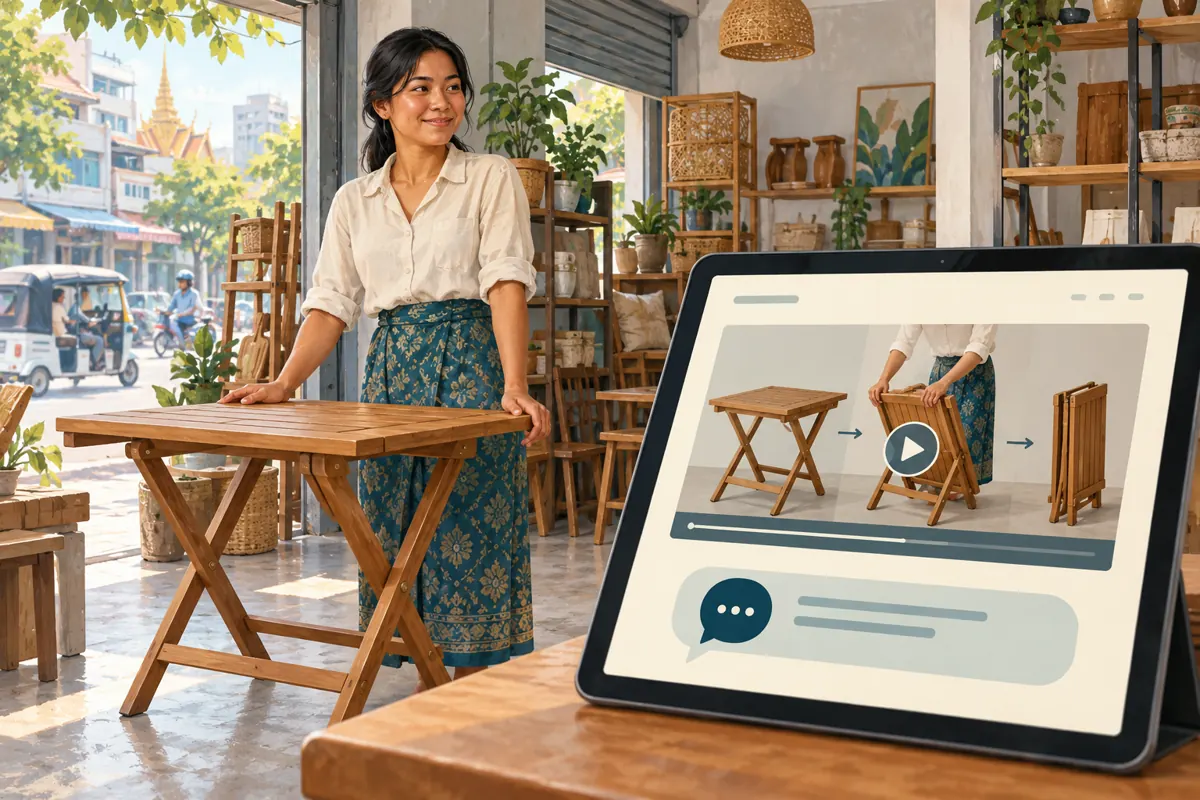
A folding table can look suitable in a photograph while leaving an important question unanswered: how does it fold, and where will it fit afterward? For a Cambodian furniture shop promoting products through social media, a demonstration placed directly on the product page can help visitors examine that question alongside dimensions and contact details. The task is to make the buying decision easier to understand. A larger engagement counter cannot explain the hinge, confirm available stock, or tell a customer whether delivery reaches their district. This workflow shows how to choose a demonstration, prepare a useful website page, test the viewing experience, and evaluate any proposed SMM service against the actual business need.
1. Start with one question the page must answer
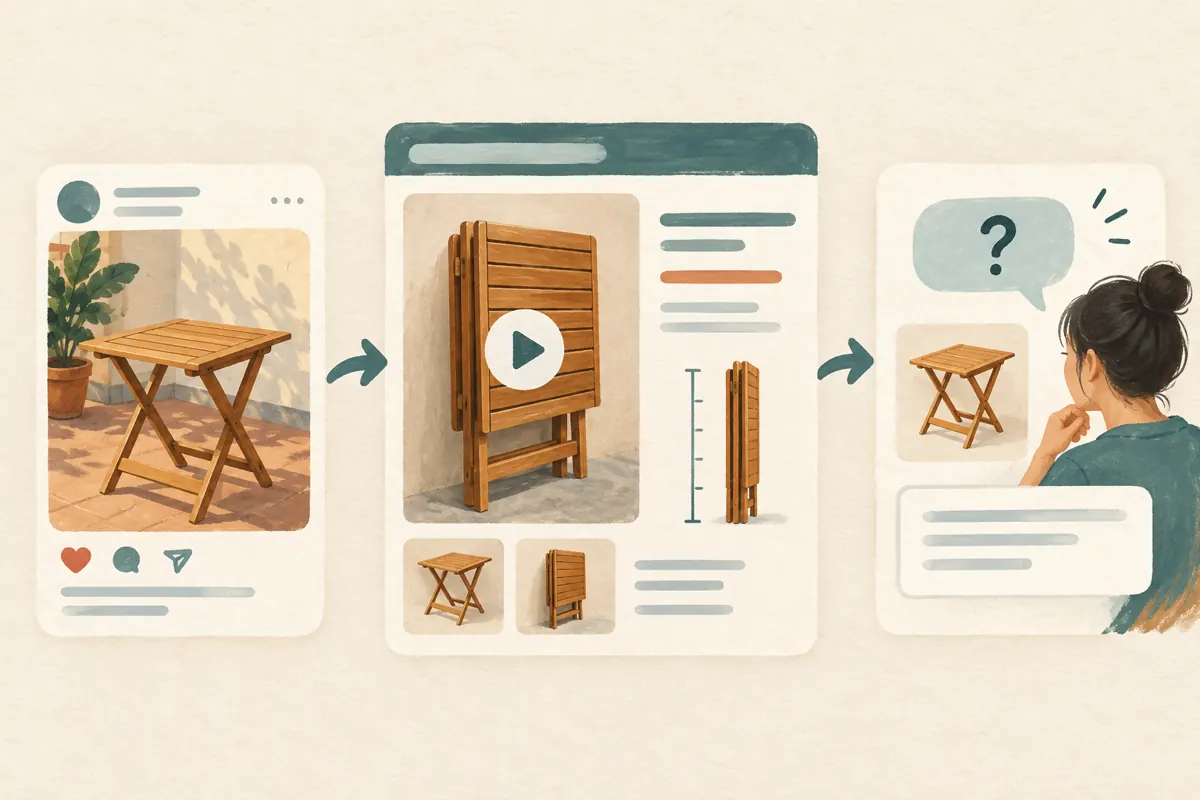
Consider a hypothetical Phnom Penh shop selling folding tables for small homes and market stalls. Its social post shows an open table, but customers keep asking whether it can stand behind a cupboard when folded. The owner already has a YouTube demonstration. Instead of sending visitors between disconnected pages, the shop wants the demonstration beside the product measurements and an enquiry button.
Write the page objective before choosing any promotion: help a visitor understand the folding process and ask about the correct model. Define a useful enquiry as a message identifying the table and a practical requirement, such as storage space or delivery location. This gives the team something concrete to improve. A visitor who discovers that the table is unsuitable has also received useful information, even if no enquiry follows.
2. Decide whether embedding solves the problem
An embed places a playable video within a webpage. It is useful when the visitor needs motion and written specifications together. A direct YouTube link may be sufficient when the shop has no maintained website or when a single demonstration answers the whole question. A clear photograph may be better when the only missing detail is a measurement. Choose the simplest format that resolves the uncertainty.
For the hypothetical table shop, embedding makes sense because the folding action and storage dimensions complement each other. However, someone must maintain the surrounding page. If the business cannot keep stock notes, model references, and contact details current, creating another destination may introduce confusion. Assign a named page owner and decide what happens when the featured table is discontinued before sending social traffic there.
3. Choose a demonstration that matches the exact product
Review the recording against the item being offered. Check the tabletop shape, leg arrangement, folding mechanism, finish, and any accessories. A similar-looking table is not necessarily a valid demonstration of the current model. If the recording shows an earlier version, explain the difference prominently or record the current item. Do not make visitors infer compatibility from a matching colour.
Watch specifically for the moment that answers the page question. The camera should show the relevant movement clearly, with hands and hardware visible. Avoid cutting away during the folding action or presenting a staged strength demonstration as a verified load rating. Keep essential product limitations in written specifications. For Cambodian customers, prepare explanations in the language the shop actually supports, and have someone familiar with the product check the meaning of technical terms.
4. Build the page around the decision
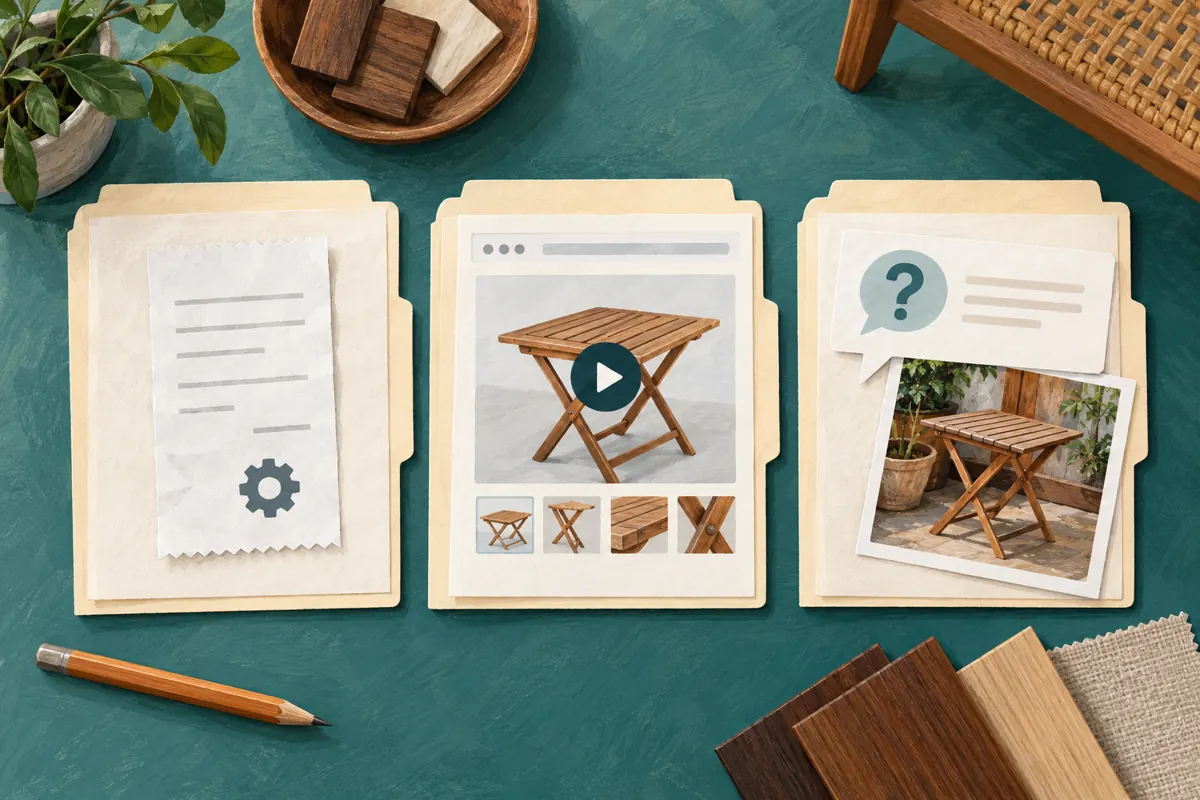
Place the model name, a useful still image, and a short explanation near the player. Add verified open and folded dimensions with units, what is included, and how customers can confirm current availability. If a displayed price excludes delivery, say so beside the price. Keep the enquiry action close enough that visitors can find it after examining the product without searching through unrelated promotions.
A hypothetical message prompt could ask customers to mention the model, intended storage space, and delivery district. Let them ask a question without supplying unnecessary personal information. Do not require an exact home address simply to discuss dimensions. The page should also explain whether the team can answer in Khmer, English, or both, based on actual staffing. Useful local context comes from clear service information, not decorative references to Cambodia.
5. Give the website maintainer a precise embed brief
YouTube’s documented desktop route is to open the video, choose Share, select Embed, and copy the supplied code for the website. Give the maintainer the approved video and intended product page. Ask them to return a preview for review. See [YouTube’s embedding instructions](https://support.google.com/youtube/answer/171780?hl=en).
Specify the desired behaviour in ordinary language: visitors choose when to play, controls remain usable, and the player fits the page. Include the exact model reference and identify the still image and contact action that belong beside it. Keep the original video link in the editorial record so reviewers can compare the source with the embedded version. A page address and a video address serve different purposes; label both clearly when sharing them with a contractor.
6. Choose playback settings without promising too much
Ask the maintainer about privacy-enhanced mode. YouTube says viewing through this mode is not used to personalise the viewer’s YouTube browsing experience; ads served there are non-personalised. It is not a promise of no advertising or no data processing. See [YouTube’s privacy-enhanced mode explanation](https://support.google.com/youtube/answer/171780?hl=en).
Prefer visitor-initiated playback for this product page. The shopper may be comparing dimensions quietly or using a limited connection. Keep the controls available and test captions where the demonstration depends on speech. Google documents caption preferences and controls, but setting a preferred language does not supply a missing translation. Its documentation also states that related videos cannot be disabled with the rel parameter; setting it to zero limits them to the same channel. See [the embedded-player parameter reference](https://developers.google.com/youtube/player_parameters).
7. Test the complete mobile journey
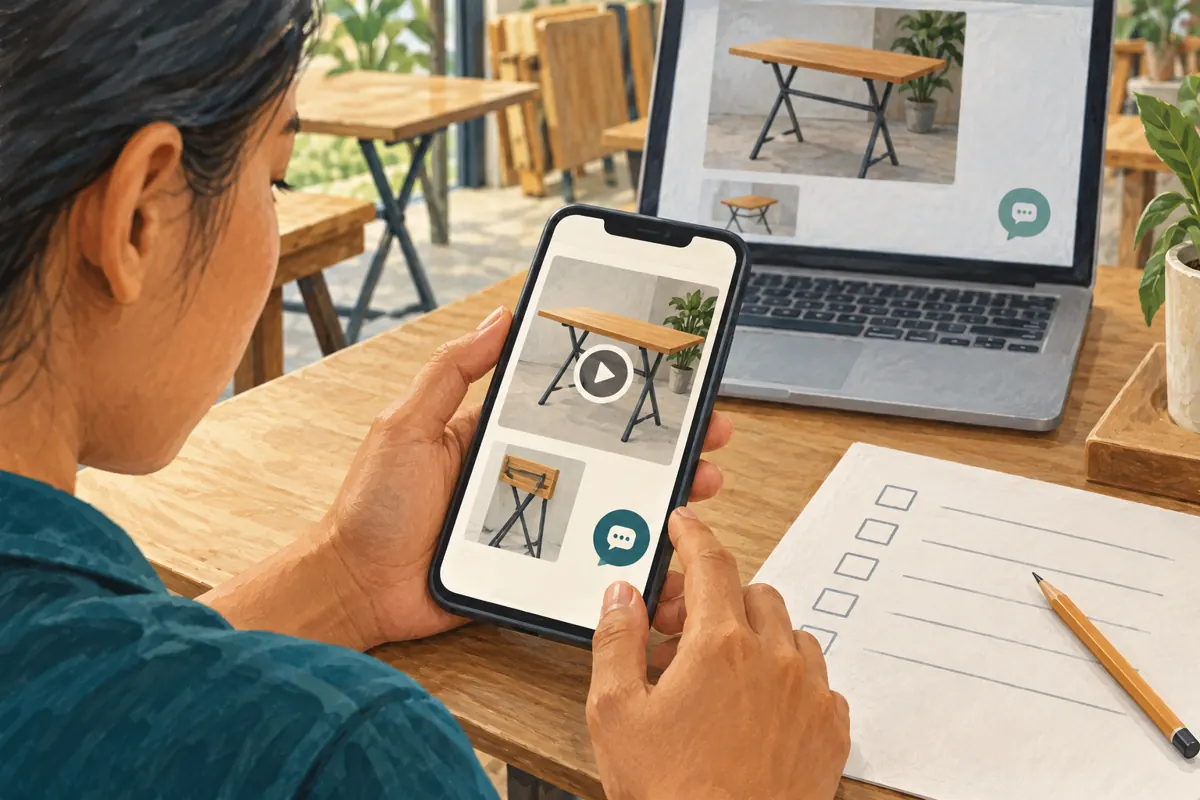
Open the preview on a phone through the same route a customer would use, starting with the draft social link. Check the product name, first screen, player, specifications, and enquiry destination. Test portrait and landscape orientation. Ask a colleague unfamiliar with the page to find the folded dimensions and explain which model the video shows. Their hesitation can reveal a layout problem that the page author no longer notices.
Try a normal mobile connection as well as the shop’s Wi-Fi. Watch for a player extending beyond the screen, contact buttons covering controls, and images that push essential details too far down. Google specifies a minimum embedded-player viewport of 200 by 200 pixels, with enough space for controls. Ask the maintainer to check compliance rather than shrinking the player until it merely fits. See [Google’s player sizing requirements](https://developers.google.com/youtube/player_parameters).
8. Keep the page useful when playback fails
A visitor should still be able to identify the product, read its dimensions, and contact the shop if the video will not play. Keep a still image and a short written explanation outside the player. Include a clearly labelled link to the original video. These alternatives also help someone who cannot listen or simply prefers reading.
If the player displays error 153, YouTube identifies missing HTTP Referer information as a cause of blocked playback. Pass the page address and exact error to the website maintainer; do not diagnose it by repeatedly pasting the standalone embed address into a browser. See [YouTube’s playback troubleshooting guidance](https://support.google.com/youtube/answer/171780?hl=en). Record the device and browser involved, then retest the actual page after the fix.
9. Evaluate an SMM proposal against the actual task
The supplied lao-smm.com catalogue includes the exact service name “YouTube Like ~ Max 500k ~ 50k/days ~ Instant ~ 𝐍𝐎 𝗥𝗘𝗙𝗜𝗟𝗟”. Its category identifies it as a YouTube likes service, while the supplied description is empty. The title alone does not verify delivery speed, account quality, audience location, or suitability. It provides no evidence that the service builds an embedded player, repairs a product page, or brings Cambodian furniture enquiries.
YouTube prohibits artificially increasing views, likes, comments, and other metrics, and says a hired promoter’s actions can affect the channel. Reject methods that conflict with that policy. See [YouTube’s fake engagement policy](https://support.google.com/youtube/answer/3399767?hl=en). Purchased engagement is not evidence of genuine interest, sales, advertising delivery, or Cambodian users. For this workflow, use the catalogue review to identify a mismatch; spend effort on the demonstration, page usability, and legitimate distribution instead.
10. Promote the useful answer and review real questions
Write the social invitation around the problem the page resolves: see how the table folds and check its storage dimensions. Avoid claims that a popular video proves product quality. Use the page in relevant conversations where people have requested information, and give staff a consistent explanation of what visitors will find. Confirm that someone can answer enquiries before drawing attention to the page.
Keep website observations, video activity, and any existing service records separate. A contact-button tap does not establish that a message arrived, and a message does not establish a sale. If customers voluntarily explain where they found the table, record that as their reported source rather than certain attribution. In a hypothetical review, repeated questions about folded thickness would justify improving that measurement and image. That is a practical editorial decision without claiming the embed caused commercial growth.
Frequently asked questions
Should a small Cambodian shop build a website just to embed one video?
Only if the page has a clear ongoing purpose and someone can maintain it. If customers already receive accurate specifications and a working video link through an established channel, first improve that experience. A website becomes useful when it brings the demonstration, product details, and enquiry route together more clearly than the current arrangement.
What if customers mainly ask in Khmer but the video is in English?
Provide a reviewed Khmer explanation of the important product details and consider an appropriate caption track or a new demonstration. Ask a Khmer-speaking colleague familiar with the table to check the folding instructions and measurements. Changing player preferences cannot translate an absent track. Never let an English-only spoken warning remain the sole explanation of a product limitation.
Can we use a supplier’s demonstration instead of filming our own?
Check permission and confirm that the recording represents the exact product you sell. Establish who controls its continued availability and what happens if the supplier changes or removes it. Avoid presenting supplier footage as a demonstration filmed by your shop. Maintain your own accurate photographs and written specifications so the page remains useful independently.
Should we remove the video if enquiries do not increase?
First examine whether it answers the intended question and whether visitors can use the page. No increase in enquiries could reflect limited distribution, unsuitable stock, unclear pricing, or customers finding enough information without messaging. Review actual questions and usability problems before deciding. Change one meaningful element at a time and record what changed, without treating a small comparison as proof.
Can panel likes make the product page more trustworthy?
They cannot establish product suitability, customer satisfaction, or local demand. Trustworthy information comes from an accurate demonstration, clear measurements, honest limitations, and a responsive contact route. Do not present purchased engagement as customer endorsement. If an agency proposes likes as the solution to missing product information, ask it to explain how the underlying customer question will be answered.
Explore the current service catalogue, create an account, or ask a specific question through support tickets.
- YouTube Help: Embed videos and playlists
- Google for Developers: YouTube Embedded Players and Player Parameters
- YouTube Help: Fake engagement policy
Prepared with AI assistance. Illustrations explain the workflow and do not represent customer results.