21/10/2026 14:08
Which Wheel Question Still Needs an Answer? YouTube Comment Filters for Cambodian Trolley Shops

A trolley demonstration can show how smoothly a wheel turns while leaving a buyer’s most important question unanswered: will that replacement fit the trolley already in their shop? For a Cambodian business promoting platform trolleys and spare wheels on YouTube, useful comment management starts with finding those specific uncertainties. Scrolling through praise and answering whatever appears first is an unreliable routine. This guide explains how to combine YouTube’s comment filters with a small working record, verified product information, and clear replies. It also explains where an SMM-panel listing fits into the decision—and why purchased comments cannot stand in for customer conversations. The shop examples below are hypothetical.
1. Define the unanswered decision before opening the comments
Start each review with a business question: what information does a viewer still need before choosing a wheel, requesting a quotation, or deciding that this product is unsuitable? These are different outcomes. A buyer asking about the mounting plate needs identification help. Someone asking whether a replacement is sold separately needs a product-scope answer. A viewer asking about collection needs current operational information. Treating all three as sales leads encourages premature offers and weak answers.
In a hypothetical Phnom Penh trolley shop, the owner assigns a morning review to the assistant who prepares product posts. The assistant can confirm what the demonstration includes, but a technician must check uncertain compatibility. That division gives the review a clear purpose. Before opening YouTube, agree who can answer each question type, where verified specifications are kept, and when unresolved questions will be checked again. This prevents an enthusiastic social media reply from becoming an unsupported technical promise.
2. Use filters to build a manageable first pass
On a computer, open YouTube Studio and select Community. Review Published comments and use the filter bar to narrow by questions, response status, or search. YouTube also provides a Held tab. These are navigation tools for reviewing comments, rather than a complete customer-service record. [YouTube’s review and reply guidance](https://support.google.com/youtube/answer/9482367?co=GENIE.Platform%3DDesktop&hl=en) documents the available controls.
For the shop’s first pass, look for comments needing an initial answer, then read each full conversation before deciding what to do. Begin with the trolley demonstration currently being promoted so that the review remains manageable. After that, check older demonstrations still linked from product posts. Keep a short note of the videos reviewed and any active filters. If the list looks unexpectedly empty, broaden the view before concluding that nobody needs help. A narrow review is useful only when the person conducting it remembers what was excluded.
3. Search using the customer’s vocabulary
Build a small vocabulary list from actual comments rather than relying entirely on catalogue terminology. Your team may call an item a swivel caster, while a customer describes the wheel that turns, the bottom bracket, or the replacement for a blue trolley. Search the model code separately from descriptive words. For Cambodian audiences, include the Khmer wording customers actually use and any English product terms appearing in the same conversations. Do not assume that one translated phrase covers every way people ask.
YouTube’s desktop search can match keywords and interpret topics or meaning; its topic and similar-comment search covers the last 90 days. Treat the results as leads for reading, not verified classifications. [YouTube explains these search limits here](https://support.google.com/youtube/answer/9482367?co=GENIE.Platform%3DDesktop&hl=en). In the shop’s own workflow, repeat a search with a concrete part name when a broad query produces irrelevant results. For an older video, manually inspect relevant conversations as well. A helpful-looking result still needs to be checked against the actual product shown.
4. Separate compatibility, availability, and follow-up work
Give each useful comment one working category. Compatibility means the shop needs to establish whether an item suits the customer’s equipment. Availability covers stock, separate-part sales, collection, or delivery arrangements. Follow-up means an earlier answer created another question or left an agreed action unfinished. Keep these labels in a simple team note; they are your operating method, not a claim about special YouTube features. Add a fourth category for general feedback that deserves acknowledgment but needs no further action.
Consider three hypothetical comments: “Does this fit the trolley with the narrow plate?”, “Can I buy only the wheel?”, and “I sent the model yesterday; did you check?” The first belongs with the technician, the second with the person checking the product offer, and the third with the person responsible for the earlier conversation. None should receive the same automatic “Please order now” reply. Assigning an owner is especially useful when one employee films demonstrations and another manages the shop counter.

5. Verify the missing detail before recommending a part
A visual resemblance is a starting point for identification, not confirmation of compatibility. In the hypothetical shop, the technician checks the model reference, mounting arrangement, relevant dimensions, and documented product requirements before recommending a replacement. The social media assistant records precisely which detail is missing. Avoid asking customers to collect a long list of information when one clear photograph or model reference would determine the next step. Equally, do not promise a match because both wheels look similar in a video.
A useful hypothetical reply is: “The demonstration shows a replacement with a plate mounting. We cannot confirm your trolley from the wheel colour. Please send the model reference and a clear mounting-plate photo through our listed business contact.” Explain what the requested information will help establish. Keep addresses, telephone numbers, receipts, and order details out of public comments. If the answer requires inspection, say so plainly and describe how the customer can arrange it without implying that a purchase has already been accepted.
6. Write an answer that remains useful to the next viewer
Structure a reply around the direct answer, its scope, and the next action. Start with what you know: whether the video shows a complete trolley, a wheel assembly, or a demonstration sample. Then explain the condition that affects the answer. End with one sensible next step. This makes the reply useful even to someone who finds the video later and has a similar question. Avoid copying internal stock notes into public replies without checking whether they will still make sense outside the team.
For example, a hypothetical answer might say: “This demonstration shows the complete wheel assembly, including its bracket. A wheel-only replacement needs a separate check. Tell us which part is damaged through our business contact, and we will confirm the appropriate option.” That answer provides more value than an unexplained contact request. Write in the customer’s language when the team can do so accurately, preserving model codes and units. Ask a fluent colleague to review uncertain Khmer wording rather than guessing at technical meaning.
7. Keep reply status separate from resolution status
Posting a reply records an action; it does not establish that the customer’s question is resolved. A request for a photograph leaves work pending. A technician’s answer may still need clarification. YouTube Studio’s Android response filters include Unresponded, Responded, and New replies to your response. [The official mobile guidance](https://support.google.com/youtube/answer/9482367?co=GENIE.Platform%3DAndroid&hl=en) describes these options. Use your own working record to track the business outcome.
A minimal record needs the video or conversation reference, a short question summary, the person responsible, the missing information, and the next review date. Use practical states such as awaiting customer detail, awaiting technical check, answer provided, and no further action. Record a confirmed order separately. If someone stops replying, mark the conversation inactive after your chosen review period without labelling it a successful sale. During each review, inspect pending follow-ups before starting another batch of new questions.

8. Evaluate the SMM listing against the actual task
The supplied lao-smm.com catalogue includes “Youtube Comments ~ Custom ~ Max 100k ~ 50k/Days ~ Instant ~ 𝐍𝐎 𝗥𝗘𝗙𝗜𝗟𝗟”. Its title identifies a custom-comment offering, but the supplied description is empty. The title’s delivery and quantity wording does not establish how comments are generated, whether a service complies with platform rules, or whether participants are Cambodian buyers. It provides no basis for treating those comments as technical enquiries, testimonials, or verified customer experience.
For this workflow, ordering comments would not resolve the missing product information. YouTube prohibits artificial increases in engagement, including comments, and warns that a hired promoter’s actions can affect the channel. [YouTube’s fake engagement policy](https://support.google.com/youtube/answer/3399767?hl=en) is the relevant decision boundary. Do not use purchased questions to simulate demand or purchased praise to imply satisfaction. Purchased engagement is not evidence of genuine interest, sales, advertising delivery, or Cambodian users. Allocate the review effort to real conversations and clearer demonstrations.
9. Avoid the shortcuts that hide useful questions
One common mistake is searching only for the exact product name. Another is reviewing only comments with obvious question wording. A statement such as “Mine has a different bracket” may contain the most important uncertainty in the thread. Add a brief broader scan after the focused pass. Also avoid ranking attention solely by visible likes: a quiet, specific compatibility question may require more work than a popular compliment. Priority should reflect the information needed and the consequences of an incorrect answer.
A second group of mistakes happens after discovery. Staff answer without checking the video, repeat an old stock statement, or close a task as soon as someone sends a reply. Prevent these errors by opening the relevant demonstration and confirming the product context before responding. When a viewer challenges the explanation, inspect the issue rather than treating criticism as an obstacle to promotion. Correct an inaccurate shop answer clearly, and update the internal reference that caused it so the same error does not recur.
10. Turn unresolved patterns into better demonstrations
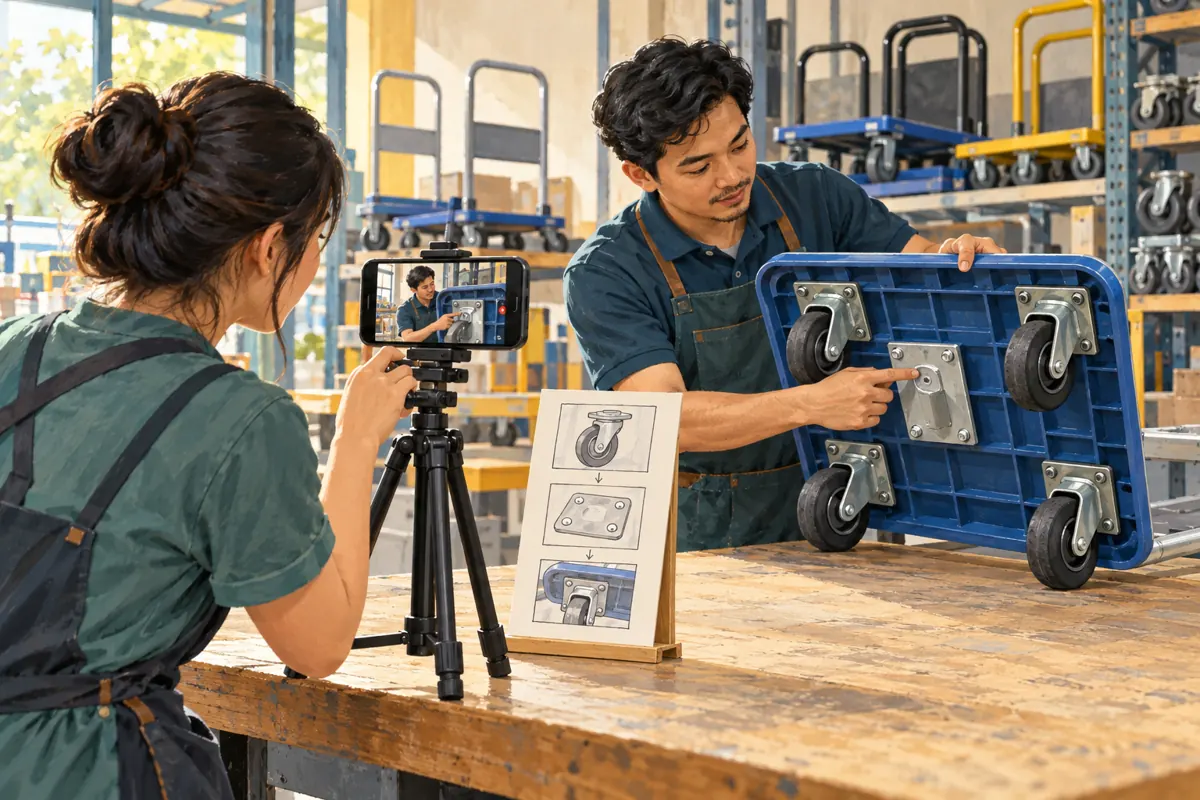
At the end of the review, look for explanation gaps rather than simply counting comments. In a hypothetical example, several conversations reveal that viewers cannot see the underside mounting plate. The next useful asset is a close-up showing what information identifies that plate. It need not become a broad product advertisement. Record why the extra demonstration is needed, which question it answers, and which limitations must remain clear. Use shop-owned samples rather than exposing a customer’s private photographs without permission.
Evaluate the routine through observable work: whether a pending question received a checked answer, whether the same missing detail keeps returning, and whether a customer independently confirmed a next step. Keep enquiries, quotations, and orders distinct. You can improve a confusing demonstration even when the comment sample is too small to support conclusions about demand. Before sharing the video again, ensure that someone is ready to handle follow-ups and that the promised contact route is monitored. Promotion is more useful when the business can finish the conversation it starts.
Frequently asked questions
Does an empty filtered list mean every customer has an answer?
No. It means that the current view returned no matching items. Clear unnecessary filters, check the relevant videos, and inspect your pending-work record. A customer may still be waiting for a technical check even after the shop has replied. Treat the filtered list as one input to the review.
Should we answer publicly or move everyone to a private conversation?
Answer general product questions publicly when the information is verified and useful to others. Move customer-specific photographs, delivery details, and order information to the shop’s established business contact. Explain why the private step is needed. An unexplained request to contact the shop leaves later viewers with the same unanswered question.
What if a Khmer comment uses a part name our staff do not recognise?
Preserve the original wording and ask a short clarification question. Compare it with the product and the surrounding conversation before translating it into a technical label. A fluent colleague can help distinguish everyday wording from catalogue terminology. Do not confirm compatibility until the team understands which component the customer means.
Can we buy custom comments to demonstrate common questions?
Do not present purchased comments as independent customer interest. If a question helps explain the product, include it openly in the shop’s own demonstration or FAQ and label any invented scenario hypothetical. This provides the explanation without fabricating a customer conversation. An SMM listing is not evidence that the proposed activity is permitted by YouTube.
How often should a small shop review comments?
Choose a routine the team can consistently maintain, with an extra check after sharing a demonstration widely. Assign a named reviewer and a backup. Avoid promising an immediate answer when technical staff are unavailable. The important measure is whether pending questions receive an appropriate next action, not how often someone opens Studio.
Explore the current service catalogue, create an account, or ask a specific question through support tickets.
- YouTube Help: Review & reply to comments — Computer
- YouTube Help: Review & reply to comments — Android
- YouTube Help: Fake engagement policy
Prepared with AI assistance. Illustrations explain the workflow and do not represent customer results.